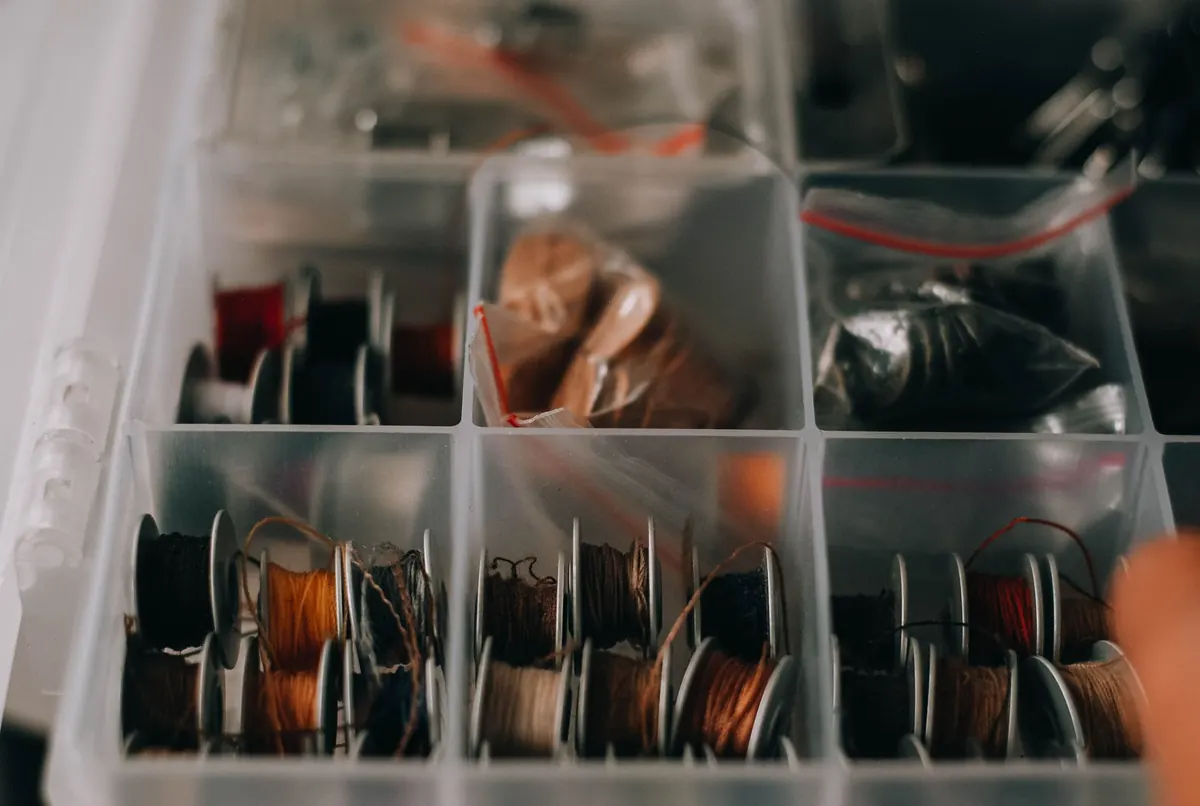
A loose bobbin rolling around in a drawer is a small thing that costs you time every single week. You tip out the whole pile looking for the pale grey you wound last Tuesday, find it tangled with two others, and lose ten minutes retrimming thread tails. Bobbin storage is not glamorous, but it is one of the few sewing-room jobs where a modest spend or a clever repurposing job pays you back immediately. The best setup depends on how many bobbins you keep wound, whether your bobbins are plastic or metal, and whether your machine ever leaves the house.
Four things decide whether a storage system works for you: capacity, visibility, portability and cost. There is also a fifth that people forget — protection. Thread does not enjoy direct sunlight, damp or dust, and a bobbins rack left on a south-facing windowsill will not do your cottons any favours over a year or two.
Capacity is easy to underestimate. Most sewists who have been at it a while keep between twenty and sixty bobbins wound, often in colour families. If you are buying storage, count what you have now and add a third.
The clear plastic compartment box is the default for good reason. It is inexpensive, stackable, and lets you see at a glance whether the colour you want is in there. Fixed-divider boxes typically hold between twenty-five and fifty bobbins; adjustable boxes let you widen compartments for larger bobbins or narrow ones for metal Class 66 bobbins.
The drawbacks are equally predictable. Cheap hinges crack, and slim compartments let bobbins rattle so thread tails unwind. Tuck each tail under a few of its own winds before it goes in, and the problem mostly disappears. Before you buy, measure your bobbin diameter and height and take one bobbin to the shop with you if you can — bobbin sizes vary more than the packaging suggests, and a box that fits one machine's bobbins may not close properly on another's.
A bobbin ring is a silicone or moulded plastic disc with radial slots, holding anything from ten to twenty-five bobbins with the thread facing outwards. Fully loaded, it sits neatly beside the machine or drops into a project bag for a class. Visibility is the best of any option, and grabbing a bobbin takes a second.
What you lose is protection. Rings are open to dust and light, and the exposed thread can catch on other items in a bag. They suit bobbins you are actively using and colours you change often; they are less good as long-term archive storage. Foam clip strips work on the same principle and can be cut to length, though foam eventually perishes.
A magnetic case is usually a tin or shallow box lined with a magnetic sheet. Metal bobbins snap into place and stay put, which makes these excellent for travel — no rattling, no unravelling, no bobbins escaping into the lining of your bag.
The catch is that most modern domestic machines use plastic bobbins, and plastic does not stick. If you sew on a machine with metal bobbins, a magnetic tin is close to ideal. If not, you are paying for a feature you cannot use. Keep strong magnets away from your machine's electronic components, from bank cards, phones and mechanical watches, and away from medical devices such as pacemakers — if that applies to you or anyone in the house, check with a healthcare professional before keeping strong magnets in your sewing space.
Some of the tidiest bobbins storage costs almost nothing. A few favourites:
Reuse what you have before buying anything. A cutlery drawer insert that no longer fits your kitchen makes a perfectly respectable bobbin tray.
The best storage in the world fails if you cannot tell which thread a bobbin came from. Where possible, store the bobbin with its spool — same compartment, or the spool standing on top of its bobbin on a dowel. When that is not practical, label the compartment rather than the bobbin. Marker pen on a plastic bobbin flange can leave residue that transfers to thread; a strip of masking tape on the box lid, or a small label under each compartment, is safer and easier to update.
Two habits keep any system working. Wind bobbins so the thread sits just below the flange — overfilled bobbins refuse to sit flat in slim compartments. And keep the whole collection out of damp rooms and direct sun; a utility room or garage is a poor long-term home for thread.
If you keep under twenty bobbins and sew in one place, a ring beside the machine is hard to beat. Past forty bobbins in colour families, stackable compartment boxes keep everything visible and dust-free. If your machine travels to classes, or you use metal bobbins, a magnetic tin earns its place in your bag. And if you would rather spend your money on fabric, an ice cube tray and a labelled bead box will do the job perfectly well. Many sewists end up with a hybrid: rings for the colours in play, boxes for the archive, a tin for the class bag.
Photo: rakhmat suwandi / Pexels

A practical ten-point checklist for planning craft room storage, from zoning by activity to clear containers,...

Sewing circles, guilds and workshops exist in most UK towns — you just need to know where to look. Here is how to...
Practical ways to fit a sewing room into a small UK flat, using folding furniture, clever layout and vertical...

Sewing thread storage, organization, and inspiration..
