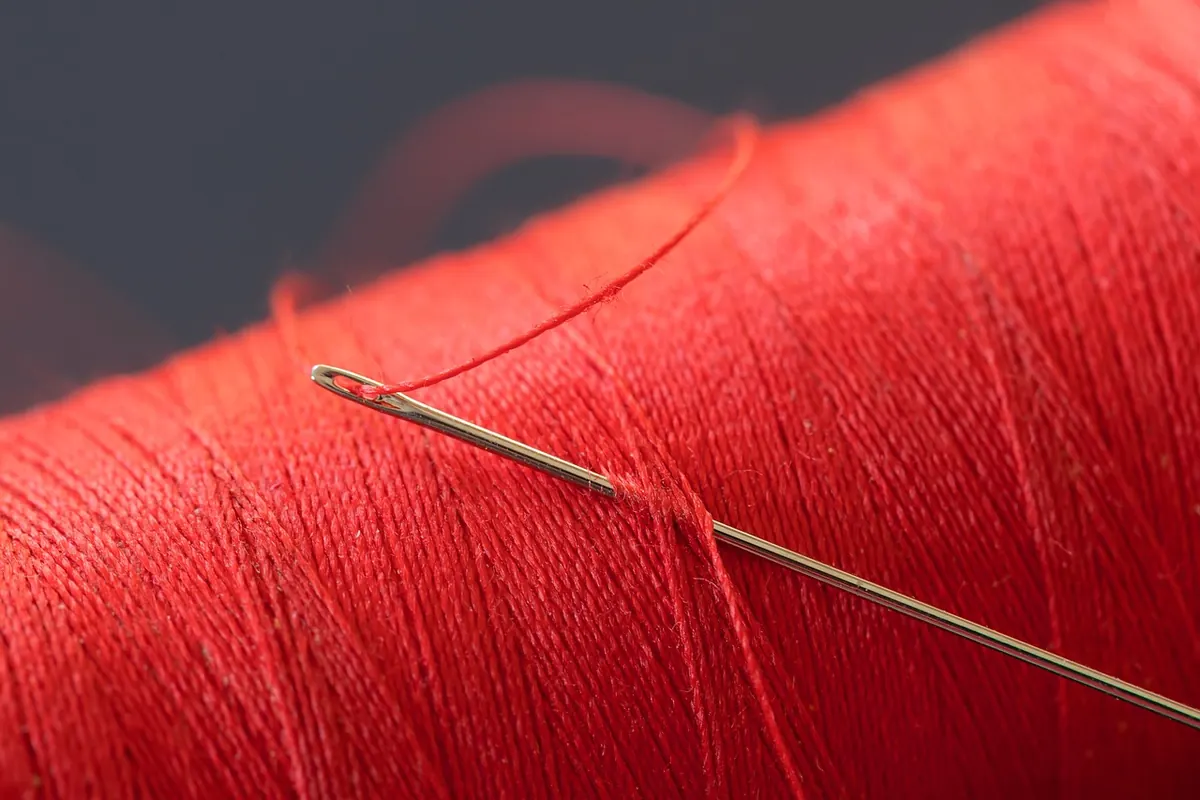
The light changes first. By late September the evenings are dark by seven, and the pull towards a lamp, a pot of tea and something to sew becomes hard to ignore. Autumn is the best season for home sewing: you are indoors anyway, the fabrics are heavier and more forgiving than summer cottons, and everything you make gets used the same week. Here are eight projects worth your time, roughly in order from quick afternoon makes to longer ones for the darker months.
Autumn fabrics are the ones that feel warm in the hand. Brushed cotton, sometimes sold as flannelette, is soft and cheap enough to use for cushion backs and linings. Needlecord in a fine wale presses beautifully, though it likes a slightly longer stitch and a sharp needle. Linen-cotton blends give cushions a bit of structure; wool tweed, wool-mix coating and heavier drill are ideal for draught excluders and doorstops where you want the fabric to hold its shape.
Think about colour before you think about print. Rust, ochre, damson, plum, deep teal, forest green and oatmeal all sit together without much effort, which is why they turn up in autumn collections every year. Small-scale ditsy prints, toiles, tartans and checks work better than big bold motifs on small projects like mug cosies, where a large repeat gets chopped into nonsense.
One habit worth keeping: pre-wash anything that will be washed later. Flannel and wool-mix shrink, sometimes by enough to spoil a fitted cover. Wash it the way you intend to wash the finished item, dry it flat, then press before cutting.
The most useful thing you can make this month, and the easiest to get right. You need one cushion pad, one front panel and two overlapping back panels. No zip, no buttonholes, no swearing.
If the fabric is loosely woven, zigzag or overlock the raw edges inside before turning. A cushion takes about half a metre of 140cm fabric, so it is a good way to use up remnants from bigger projects.
A runner is a good first quilting project because it is small enough to manage on a domestic machine and still teaches you the whole process. Cut the top to the table length plus 20–25cm overhang at each end, and about 35–40cm wide. Piece it from strips if you like, or keep it simple in one fabric and let the quilting do the work.
Layer the top, a thin cotton or wool wadding and a backing, tack the layers together, then quilt parallel lines about 5cm apart using a walking foot. Bind the edges with a 6cm strip folded in half, sewn to the front, wrapped to the back and stitched down. A runner in a warm check with a plain oatmeal binding looks far more expensive than it cost.
Cosies are small, satisfying and quick enough to finish in an evening. For a teapot cover, measure the pot around its widest point and from rim to base, add 4cm to each measurement for seams and ease, then cut two outer and two lining pieces. Sandwich a layer of insulating wadding between them, sew the side and top seams, and bind the bottom opening with a strip of bias binding.
Mug cosies follow the same idea: a strip long enough to wrap around the mug, a loop on one end and a button on the other. Keep the top edge well below the rim so the fabric stays clear of hot drinks.
For a hot water bottle cover, draw round the bottle and add 4cm all round. Use an envelope back so the bottle can be removed, and keep the fit reasonably snug. Check the rubber for cracks and perishing before the season starts, replace bottles that look tired, and fill with hot rather than boiling water.
A draught excluder is a long tube, usually 90–100cm, filled to about 1.2kg so it stays put against the door. Rather than stuffing the cover directly, sew a simple calico inner bag for the filling. The outer cover can then go in the wash without you chasing lentils around the kitchen floor.
Doorstops work the same way. A pyramid shape from four triangles plus a base, filled with rice or dried pulses in an inner bag, will hold a door open and look good doing it. Corduroy, tweed and heavy drill are the sensible choices here; anything thin will sag within a fortnight.
If you want one long project for the winter, make a lap quilt roughly 1.4m by 1.8m. Wool-mix wadding is worth the extra cost because it traps warmth without feeling bulky, and a brushed cotton backing makes the underside as inviting as the top. If quilting the whole thing feels daunting, tie it instead at regular intervals with embroidery thread, or quilt widely spaced diagonal lines and accept that it will be soft rather than flat. Bind the edges by machine in a colour that picks out one of the prints.
Keep a basket by the machine with a seam gauge, small snips, Wonder clips, tailor's chalk and thread in oatmeal and dark grey, which covers most autumn projects. Have both 80/12 and 90/14 needles to hand; corduroy, tweed and denim blunt a fine needle quickly. Always sew a test seam on a scrap of the actual fabric and check the tension before you commit to a long seam.
Press as you go. It is the single difference between homemade and handmade, and it costs nothing but a few seconds at the ironing board. Start with a cushion this week, then let the table runner and the cosies follow. By the time the clocks go back, the sofa will be covered in things you made yourself.
Photo: Myriams-Fotos / Pixabay
A practical ten-point checklist for planning craft room storage, from zoning by activity to clear containers,...

Sewing circles, guilds and workshops exist in most UK towns — you just need to know where to look. Here is how to...
Practical ways to fit a sewing room into a small UK flat, using folding furniture, clever layout and vertical...

Sewing thread storage, organization, and inspiration..
