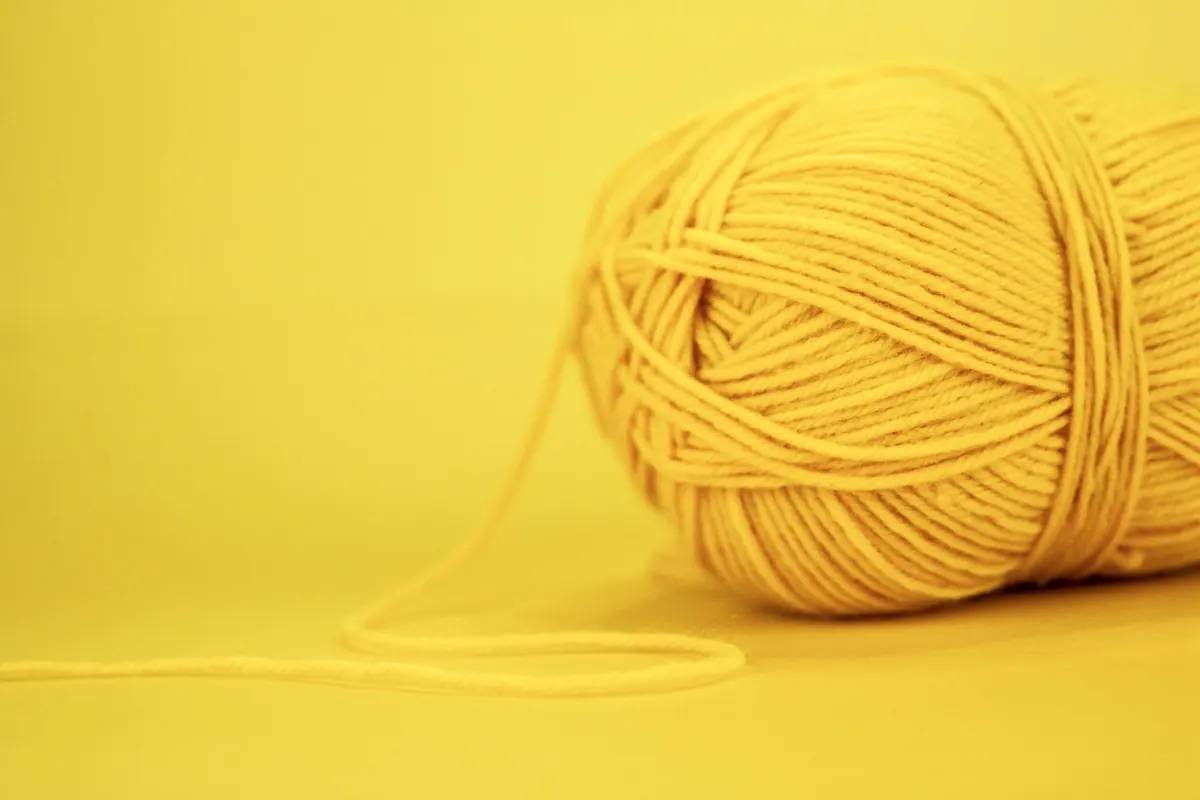
They sit in the same drawer, both twisted, both colourful, both sold in every sewing shop in the country. Yet a spool of sewing thread and a skein of embroidery floss are built for different jobs, and swapping one for the other rarely ends the way you hope. Fibre, ply and thickness are the three things that separate them. Once you know what each one is for, you stop guessing at the till and start choosing on purpose.
Sewing thread exists to hold fabric together and then get out of the way. It has to be strong, smooth and resistant to abrasion, and it usually wants to match the cloth so a seam reads as a line rather than a feature. Embroidery thread is the opposite: it exists to be looked at. It needs sheen, coverage and a soft enough hand to sit on top of fabric without dragging it out of shape.
That one difference — structural versus decorative — explains almost everything else, from how the thread is twisted to why your machine throws a tantrum when you feed it the wrong one.
Sewing thread is usually polyester, cotton, or a polyester-cotton core spun, where a polyester core is wrapped in cotton fibres. Polyester wins on strength, stretch and colourfastness. Cotton wins on heat tolerance — it takes a hot iron without melting — and on the matte finish that suits linen, wool and other natural cloth.
Embroidery thread covers far more ground:
Ply simply means how many strands are twisted together to make the finished thread. Two-ply and three-ply are common in sewing thread. Stranded cotton is usually six strands loosely twisted, and each of those strands is itself made from finer plies twisted together — which is why it pulls apart so obligingly when you want two strands instead of six.
Twist matters as much as count. Sewing thread is tightly twisted so it resists fraying and passes through tension discs without shedding fibres. Embroidery floss is loosely twisted so it lies flat, covers fabric generously and catches the light from different angles. That looseness is exactly why floss tangles, frays and shreds inside a sewing machine, and why sewing thread looks flat and lifeless when you try to embroider with it.
Machine threads are sold by weight, and here the number works backwards: a 40-weight thread is thicker than a 60-weight. Forty weight is the standard for machine embroidery and general decorative stitching. Sixty weight is for fine detail and small lettering. Thirty weight gives you heavy outlines and bold fill. Sewing thread follows the same logic — all-purpose is often 40 weight, 50 weight for piecing — alongside tex numbers, which run the other way, so a higher tex means a thicker thread.
Hand embroidery is simpler and more confusing at once. You choose thickness by how many strands you separate and thread through the needle. One strand for delicate detail such as small facial features. Two or three for most petals, leaves and lettering. All six for thick, sculptural stitches and padded work. Perle cotton skips the counting entirely: the size on the label is the thickness you get.
Sometimes, deliberately, with adjustments. Sewing thread in hand embroidery works well for sashiko, visible mending and rugged utility stitching — it gives a flatter, more practical line, though polyester has a slight sheen and cotton can be harder to separate for fine work.
Embroidery floss in a sewing machine is possible but fiddly. Use a fresh, sharp needle with a generous eye, loosen the top tension, slow the machine right down and stitch a test on scrap first. Expect to rethread more often than usual. Rayon will shred if you push it. Never load hand embroidery floss into the bobbin of a standard machine — it is too soft and too thick to behave.
For machine embroidery, the bobbin usually takes a fine 60-weight bobbin thread in a neutral shade, and the top takes your 40-weight colour. That contrast is intentional: it keeps the underside neat and stops the design from turning stiff.
Before you buy, ask what the thread has to survive. A cushion cover that gets washed weekly is a polyester job. A framed hoop that never leaves the wall can afford silk or rayon. A child's patch on a school jumper wants strong, colourfast sewing thread, not delicate floss.
In the hand, keep your working lengths to around 45cm. Longer strands fray, knot and lose their sheen before you reach the end of them. Thread conditioner or a light pass over beeswax tames stubborn floss and metallics. Use embroidery needles with a large eye for floss and sharps for fine detail, and match your machine needle to the thread weight rather than the fabric alone. Test vivid reds and deep blues on a scrap of your fabric before committing — strong dyes can bleed, and it is far easier to change thread than to unpick a finished hoop.
Buy one good spool of all-purpose sewing thread, one cone of 40-weight machine embroidery thread and a small set of stranded cotton in colours you actually like. That trio covers most projects, and you will learn the differences faster by stitching with them than by reading about them.
Photo: Karen Laårk Boshoff / Pexels

A practical ten-point checklist for planning craft room storage, from zoning by activity to clear containers,...

Sewing circles, guilds and workshops exist in most UK towns — you just need to know where to look. Here is how to...
Practical ways to fit a sewing room into a small UK flat, using folding furniture, clever layout and vertical...

Sewing thread storage, organization, and inspiration..
